
 LinkedIn
 ALOOSTA
 Contact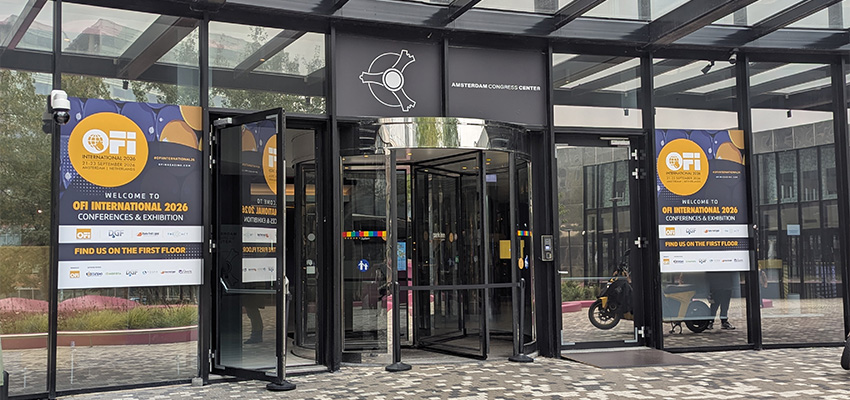
The : Challenges and Innovations', took place in Amsterdam on 22–23 September 2026 as part of OFI International 2026.
A central focus of the conference was the ongoing development of analytical methods for mineral oil hydrocarbons (MOSH/MOAH). Presentations addressed contamination pathways, including jute packaging and lubricants used during production, as well as the challenge of achieving consistent and reliable analytical results. New approaches based on comprehensive two-dimensional gas chromatography (GC×GC) and automated analytical procedures were presented, demonstrating the importance of robust and harmonised methods for both industry and official control. The programme also highlighted the growing range of contaminants. Contributions covered persistent organic pollutants (POPs), chloroparaffins, phthalates, 3-MCPD esters, and glycidyl esters, as well as contaminants originating from packaging and processing. Particular attention was given to the analytical challenges of detecting contaminants at very low concentrations and of translating analytical results into meaningful risk assessments.
Another important theme was innovation in prevention and mitigation. Presentations explored improved analytical strategies and alternative approaches to conventional hexane-based oilseed extraction. They also examined the use of short-path distillation to reduce contaminants in edible and marine oils. These contributions demonstrated how technological innovation can supplement monitoring and regulatory measures to help ensure safer products.
The conference also offered valuable insights into the ever-changing regulatory and data landscape. Discussions covered contaminants for which there are no specific legal maximum levels, and the potential of large-scale food safety databases and AI-supported data analysis. These discussions emphasised the growing importance of high-quality data for risk assessment, regulatory decision-making, and proactive contaminant management. Overall, the DGF Conference demonstrated that managing contaminants in oils and fats is an increasingly interdisciplinary task requiring close cooperation between analytical scientists, producers, researchers, regulatory authorities, and the wider food industry. Beyond the technical presentations, the event offered valuable opportunities for scientific exchange and networking within the international oils and fats community. The positive feedback following the conference emphasised the importance of maintaining this dialogue as analytical capabilities and regulatory expectations continue to evolve.
YOUR PLUS: At AGROLAB Dr Verwey, we can already provide analyses for not only MOSH/MOAH, PFAS and 3-MCPD/GE, but also contaminants that are receiving increasing attention, such as phthalates, PBDE and hexane.
Author: David Guth, Operational Product Manager Food- & Feed Analysis, AGROLAB GROUP


 Contact
 Career